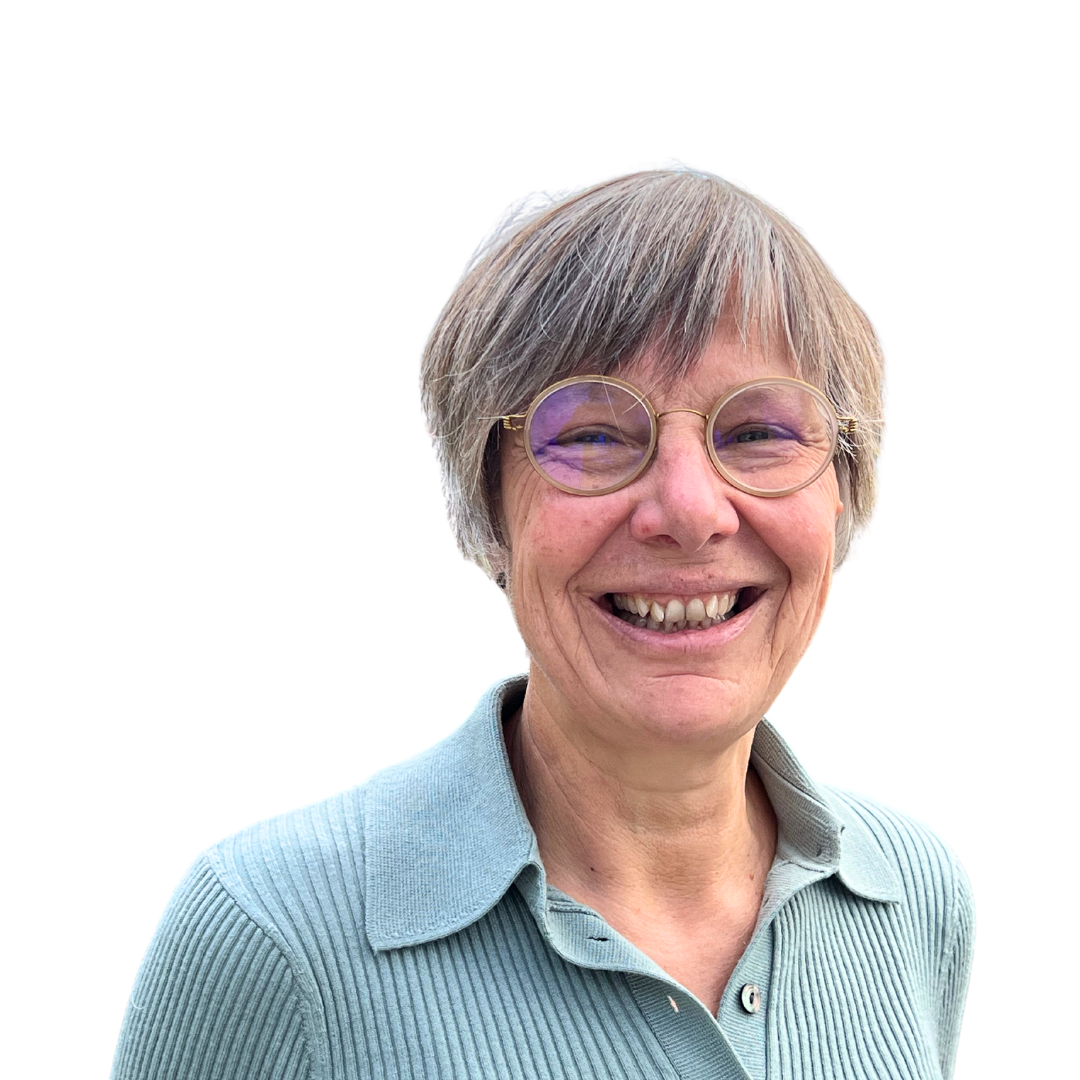
[00:00]
Welcome to the Migraine Heroes podcast, a podcast where we share real stories from real
[00:07]
people suffering and battling with migraine disease.
[00:12]
In this podcast, we seek to provide support, hope, holistic health, advocacy, and inspiration
[00:19]
for those who suffer from migraine disease.
[00:22]
Hello, Suzanne, thank you so much for being here with me today.
[00:29]
Thank you for having me, Diane, I'm really excited to be here, it's amazing.
[00:33]
Yes, it is amazing.
[00:34]
It is amazing because we've seen each other, actually, we've met each other not so long
[00:39]
I'm going to have to take, my third of May is when we met and we are the 20th of June.
[00:44]
Oh, I thought it was in April, but okay, yeah, yeah.
[00:47]
Yeah, May 3rd, I have you in my notes.
[00:50]
And so it's been, you know, a bit over six weeks, but barely.
[00:56]
Yeah, I certainly did not expect to see you so fast, especially after 20 years of migraines,
[01:02]
roughly is what I remember.
[01:05]
And what we're going to do today is really unusual.
[01:07]
We're going to have Suzanne.
[01:08]
Suzanne is still in program and we're going to talk about her journey and about how it
[01:13]
is to be in program.
[01:15]
So do you want to first get us started with who you are, where you're based, and what
[01:19]
do you do for a living?
[01:22]
My name is Suzanne and I live in Nelson, New Zealand, in beautiful Nelson with a lot of
[01:29]
sunshine hours, very beautiful place.
[01:31]
Originally I'm from Germany and I've lived in New Zealand for the last 23 years, roundabout.
[01:41]
And I've got a pretty full on job.
[01:45]
I'm a general manager looking after a couple of pharmacies for a big corporate organization.
[01:53]
And I have been doing this for the last two years.
[01:56]
And before that, I have managed retirement villages and working with older people for
[02:02]
a long, long time.
[02:03]
That's my background.
[02:04]
And I live here in Nelson with my husband and we have a black cat who is here somewhere.
[02:12]
We have six chickens and we have a nice property that keeps us busy and a house that always
[02:21]
needs a bit of work.
[02:22]
My husband is a carpenter by trade and we're actually in the middle of renovating the place
[02:28]
And yeah, so always stuff to do.
[02:34]
And so now you can make sure, what's the name of your cat?
[02:36]
Really, he hasn't got a proper name.
[02:38]
So we call him, we usually call him the German word for a male cat, Carter.
[02:47]
Yeah, yeah, yeah, yeah, yeah, yeah.
[02:50]
Almost the name in English, Carter.
[02:53]
I've also got a son, he lives in Germany and he went back to Germany to go to university
[03:01]
and then he met his girlfriend there and they just had a baby.
[03:07]
So I'm a grandma too.
[03:11]
So that's very exciting.
[03:17]
Always better to mother and to grandmother without a migraine.
[03:18]
We'll talk about that later.
[03:21]
And so do you have eggs from your chickens?
[03:23]
We do get, right now it's winter here in New Zealand when, you know, shortest day coming
[03:29]
And so at the moment they're not laying, they're just eating, but they're very happy chickens.
[03:36]
They're allowed to roam in the garden and so they have a really beautiful life and they
[03:41]
will start laying again as the days get longer.
[03:44]
And so at some point in your life, you started to develop migraines.
[03:48]
Can you talk about the first few that you experienced, if you remember them?
[03:51]
I think I had headaches or probably what was migraines the first time, maybe in my late
[03:57]
twenties and, but you know, very occasionally and I didn't know exactly what it was.
[04:05]
It was usually a really bad headache and I didn't really put too much attention into
[04:10]
it because there was no regularity.
[04:13]
I didn't know what they were and I think I managed them just by ignoring them, I guess,
[04:19]
for quite some time until they got more regular in my late thirties and going into my forties.
[04:28]
And I think I became worried in my early forties or with the start of perimenopause maybe when
[04:35]
I look back now, that's when they really ramped up and that's when I went to the doctor and
[04:41]
I remember going to the doctor the first time and saying, I'm getting those headaches.
[04:48]
I thought it had something to do with my teeth and I went to the dentist and he gave me really
[04:54]
strong painkillers and I thought something's wrong with my jaw and I got really worried.
[05:02]
And my doctor, she never mentioned the word migraine or, you know, headache, disease or
[05:08]
I didn't feel like she was taking this very seriously.
[05:11]
So I kept going back and I felt like, is there something wrong with me?
[05:15]
Why can't somebody tell me what, you know, what this is?
[05:20]
And finally we, you know, somebody called it what it actually is, migraines.
[05:25]
And I started to take really strong medication because the over-the-counter stuff just didn't
[05:32]
So I started to take Triptans and even with them, I found it hard to manage at times and
[05:39]
I developed a really weird pattern of getting a migraine once a week at least.
[05:44]
And then the pattern was usually getting a really bad day where I, you know, was basically
[05:50]
in bed and couldn't do much, taking medication, getting better the next day and then having
[05:57]
another big bad day the day after.
[05:59]
So it was always a three-day journey and then a few days break and then it kind of started
[06:07]
And so I went to a specialist then, to a neurologist and she was, you know, wanting to give me
[06:13]
preventative medication and I tried that and I couldn't take it, I just had too many
[06:18]
side effects from it.
[06:20]
And I just don't like taking medication because I know every time I take that strong migraine
[06:26]
medication I feel like a zombie and my sleep is totally disturbed and I looked for other
[06:33]
ways and I saw an osteopath and a lady that was specializing in physio for the neck and
[06:40]
my GP on a regular basis and I remember sitting at my GP crying saying, I can't manage this,
[06:48]
I can't be like this, I can't imagine my life being like this.
[06:53]
And at the same time, I tried to work through it, you know, I tried to not bother anybody
[07:00]
and I wouldn't talk about it at work only if it was really, really bad.
[07:05]
And then I would make it so that I just went home a little bit earlier because I have a
[07:09]
bit of a headache.
[07:10]
I found it really hard to talk about it because you can't see it, you can't, you know, there's
[07:16]
nothing bleeding, there's nothing broken, there's nothing visible as such.
[07:21]
It's really hard for people to understand the pain, it is also really hard for my husband
[07:25]
to understand it and I can see him being quite scared of it and right now we're in this limbo,
[07:31]
right, where I didn't have a headache for, I think, it's coming up four weeks, it's amazing.
[07:39]
Every morning he's going like, how's the heat?
[07:42]
And I can feel the worry in him and then the relief when I say, I'm fine.
[07:47]
You know, the effect this has on relationship, on our relationship, not being able to, for
[07:55]
me to say, yes, I can come with you somewhere next weekend because I don't know.
[08:01]
My passion was a little bit like I would get through the week and then it would hit me
[08:05]
on Friday, Saturday morning and before I found you it was really bad, there was no
[08:12]
pattern to it anymore, it just happened, yeah, so, and, you know, I tried to, I was reading
[08:18]
a lot about diet and, you know, I tried to cut out carbs and I love my food.
[08:26]
When I'm having those really bad attacks that I'm, I get really hungry and I want to eat
[08:32]
and I want to have carbs and I just couldn't go on those restrictions.
[08:37]
I wasn't strong enough to actually follow that through.
[08:41]
Physiologically, I have to say it's, it would be really, really hard because women will
[08:46]
have some excesses, they will have some deficiencies and so the craving is also physiological.
[08:52]
It's something that you decide in your head, it's something that happens in your body,
[08:57]
You know, being so unwell, I just didn't enjoy life a lot, I don't think and I remember when
[09:04]
I had headache three days, I was always scared that the next day I would get, you know, a
[09:10]
really big migraine or I found it hard to even enjoy those days where I was feeling
[09:15]
really good because I kind of was anticipating that the next attack would come and it's still
[09:21]
a little bit there, you know, that every day I wake up and I'm feeling good and I'm thinking,
[09:27]
this isn't something that might happen, yeah, that's an emotion women talk about a lot,
[09:33]
Yeah, and I think, you know, I'm totally prepared for another attack or something to happen.
[09:39]
I don't think I'm quite through the journey yet, it doesn't feel like I'm finished and
[09:45]
I'm kind of preparing myself a little bit for it but every time so far in the last two
[09:50]
weeks when I felt that a headache was coming on, I could manage it and I'm so bloody proud
[09:58]
Yeah, absolutely, that's an amazing sensation, that's an amazing sensation.
[10:04]
So let's talk about that, just before I want to rewind a little bit on relationships, so
[10:10]
you mentioned the relationship with your husband now where he wakes up and tiptoes a question
[10:14]
on how is your head this morning, can you comment on it before, so for the, you know,
[10:20]
the whole time, so the two decades and the last decade that was really intense and then
[10:24]
how was it also with your son, like how much would you actually share or not share to not bother him?
[10:31]
I would actually only share it if it was really bad and I couldn't function.
[10:37]
The really bad pattern basically started when he was an adult and he was not living at home
[10:44]
anymore at the time where it got really bad but I remember that, you know, sometimes I
[10:50]
had to say to him, look, I just can't do whatever it was and I would feel terrible and, you
[10:57]
know, sometimes you see the disappointment in your children's face and it just, that
[11:02]
makes it even worse when you have to say, sorry, I can't go with you or your friends
[11:08]
can't come over because I'm not feeling well.
[11:13]
And how would you, you know, recently I went to a talk, it was by a professor at Harvard
[11:17]
called Arthur Brooks and he talks about four pillars to happiness, one of which is the
[11:23]
meaning of life and knowing why you are here and why you are who you are and what you're
[11:30]
He talks about family, he talks about friends and he talks about work and meaning at work
[11:35]
and when I look at all of those four pillars, it's extremely difficult when you lead a life
[11:39]
of pain to be present for your family the way you would like to show up, to be for your
[11:43]
friends the way you'd like to behave, to find meaning in your work when work is so difficult.
[11:49]
But then what I wonder about the most is how do you feel about the meaning of life overall?
[11:55]
Like when you're suffering so much, how do you think about that?
[11:59]
I guess I think maybe the pain is teaching me or trying to teach me to slow down or to
[12:08]
change something in my life, you know.
[12:13]
I thought about it from that angle a bit.
[12:16]
I think it's, you know, living with pain, only somebody that experienced pain can understand
[12:23]
I think it affects everything and there were times when I, you know, would not be able
[12:29]
to, when I would see, you know, Jonas, my husband, being really upset for me and that
[12:36]
was the worst for me and it affected other people in my family.
[12:42]
I think as a woman you want to be, you know, you want to be that caring, that's that caring
[12:47]
side and you want to be there for your family and then you're taken out because of the pain.
[12:53]
Yeah, it makes it really terrible in families, especially also in children and in young children.
[12:58]
So there's a safety element that can come with it too.
[13:02]
And remember often saying, you know, I can't do this anymore.
[13:05]
I don't want to do this anymore.
[13:07]
I don't want to live like this.
[13:09]
And you know, I would always have times then where I would try something new, try something
[13:14]
different. And because I had so, so many, I feel that I tried so many things that haven't
[13:21]
made a difference at all that, you know, picking myself up again was not easy.
[13:28]
I did feel that in our first conversation.
[13:31]
We said, OK, I'm here yet again.
[13:33]
What is it that I have to do?
[13:34]
Like, OK, we give this a go.
[13:36]
Like we gave a go to so many other things.
[13:39]
End of the conversation, like we had a really good fit and a really good, like it was a
[13:43]
joyful conversation. We're like, oh, yeah.
[13:45]
You know what? Maybe I have hope.
[13:46]
I understand what you say and it kind of makes sense.
[13:48]
So, you know, I can see why that could possibly eventually maybe, maybe, maybe work.
[13:55]
Yeah. Yeah. I was very hesitant.
[13:57]
Yeah. And I think, you know, for me, what happened is I listened to the podcast and
[14:04]
then I started, you know, looking into you and I thought, this woman is in New Zealand.
[14:09]
I'm in New Zealand.
[14:11]
You know, I thought, this is a sign.
[14:13]
And I think that was what really then made me contact you and do the test because it
[14:18]
just affected you in Auckland.
[14:20]
I don't know why that made such a difference for me, but it was.
[14:23]
It just felt quite close physically, you know, we've never met in person.
[14:29]
Yeah. And we're also close originally.
[14:32]
I'm from Belgium. So that's right.
[14:34]
That's right. But indeed, like for me, and so how did you find me in the first place?
[14:40]
Like you were just browsing the web or?
[14:42]
No, I've got a subscription with Audible.
[14:46]
So that's where I get my books through, you know, and I, you know, I always try to read
[14:52]
and find out about migraine and how other people are dealing with it.
[14:56]
So often I just, you know, put it in as a search, as a search word.
[15:01]
And then the podcast came up and I was actually driving to one of my pharmacies when I was
[15:08]
starting listening to it.
[15:11]
And I got totally hooked and I listened to most of them, I think.
[15:18]
And then at that night I did the test.
[15:22]
And so there were the Migraine Heroes podcast.
[15:25]
Do you remember some of your favourite stories to share with others?
[15:29]
Yeah, I remember Wendy.
[15:31]
And I really resonated with that because she, her pain sounded so terrible and she was so
[15:37]
desperate and that resonated with me, that desperation, you know, and that tried everything,
[15:43]
taking all this medication, nothing helps.
[15:46]
She sounded amazing, you know, when she was speaking with you on the podcast and how good
[15:52]
And I thought, wow, there's people out there where that really made a difference.
[15:56]
Yeah, she's a really special soul.
[15:58]
And I don't know if you've listened to her husband's podcast, which is brilliant as well,
[16:03]
And then maybe also Samantha or Sylvie.
[16:05]
There's a couple that are in that generation, but maybe you don't remember as much.
[16:10]
Yeah, there was one lady also from New Zealand.
[16:12]
Yeah, Samantha or Sylvie.
[16:15]
I remember her as well.
[16:17]
She sounded like she was more my age for a kid, maybe.
[16:21]
Especially in her pain, she developed a similar pattern.
[16:23]
And so why we do all these stories is to also show women, men and children how many patterns
[16:29]
there can be and how many journeys with pain there can be.
[16:33]
They feel very unique, but they're like, okay, I resemble more Suzanne or I resemble more
[16:38]
Wendy or Amanda or Sylvie.
[16:41]
But I can find some people that resemble me and I understand why, you know, why migraines
[16:47]
And so then we met.
[16:49]
So what we did is, and usually I divide the call in three parts.
[16:52]
The first part where I listened to you, I didn't know as many details as I know now,
[16:56]
but you explained to me your pattern of migraines and how they evolved.
[17:00]
And then I usually explain to you why you have migraines in the first place, how all
[17:03]
of the symptoms that you experience relate to those migraines and interrelate together
[17:08]
to four root causes that sit below your migraines.
[17:11]
And then I usually explain how I work.
[17:13]
So we spent that time together, which I really enjoyed.
[17:15]
I was really not long ago and I really enjoyed the conversation.
[17:18]
And I also really enjoyed your doubts because I'm like, yeah, you see, I'm different.
[17:24]
And I understand everything that goes through your mind, but I also, I've seen a lot of
[17:29]
the patterns, even though not two women are the same and we're never treating people the
[17:34]
We take your body as it comes, but I had seen a lot of the conditions that you were experiencing
[17:38]
and I'm like, well, you know, let's see, let's see how it is.
[17:41]
So do you want to tell from your part, like how you felt in that call and then maybe after
[17:48]
Like you say, I was a bit hesitant and you know, my, my motivation was just can't make
[17:55]
You know, maybe this is something.
[17:56]
So, you know, I was still on this journey of finding a solution and, but because I had
[18:01]
so many negative experiences in the past, nothing really helped me that I tried.
[18:07]
Then I thought, oh, you know, it always sounds a bit very, very, yes.
[18:15]
But then I thought, look, there's nothing to lose and I give it a go.
[18:18]
And you were so energetic and you kind of explained it so well to me that I thought,
[18:24]
yeah, this all makes sense.
[18:25]
You know, the way you explained my pain to me and, you know, where you think it might
[18:32]
And, and, you know, I sound like you knew me and that really helped to ease my mind.
[18:38]
And I also love the idea of what you're doing with this app, you know, I think this is amazing.
[18:43]
The simple fact that I track my COAM every day, that's amazing, you know, for starters,
[18:50]
I tried it in the past to track my headache, it kind of never worked out.
[18:55]
And now because I'm getting the feedback as well, you know, from you guys, this is great.
[19:00]
And I can see, you know, myself, how I'm tracking and how many blue days, you know, when I'm
[19:07]
sharp and free, I'm having, you know, so I love, I love the concept and how you do it.
[19:13]
I like that Helene is jumping in sometimes, you know, you have different people.
[19:21]
It's all down, it's all virtual and actually totally connected.
[19:26]
It's like a community.
[19:27]
Yeah, it's very true what you say, very, very, very true.
[19:32]
Even though it's all virtual, we feel incredibly connected and I have to tell you on the behalf
[19:37]
of, so Helene is based in Lyon in France and we've been working together for about two
[19:41]
years and a half and we feel incredibly connected to one another and incredibly connected to
[19:47]
And I remember this one thing when I meet someone, first of all, indeed in that second
[19:51]
part of the conversation and you got me, well, I really understand you.
[19:54]
By that time I'm like, yeah, I understand Suzanne, I understand not just the migraine
[19:58]
she has now, but the journey that led to where she is today, which I explained to you and
[20:04]
I think that brings a massive relief of, oh my God, I am actually making sense.
[20:11]
So for 10 years I thought I was erratic, my body wasn't making sense.
[20:15]
Now I understand that I actually, the decisions that my body is making is actually to protect
[20:20]
me, to make the problems as small as possible and to actually, you know, in a really smart
[20:25]
way, keep me healthy, even though it doesn't look like it.
[20:29]
And then I really, you know, when I'm on board you, I really give you my word in the most,
[20:34]
you take my soul with you.
[20:36]
And so, and for you, I never look at, oh, we need to get 80 to 90% of success.
[20:42]
No, no, no, no, no.
[20:43]
I'm like, this is 100% of Suzanne's life.
[20:47]
And for her, it's 100% of who she's going to be for the future and how she's going to
[20:52]
show up to the world.
[20:53]
And so we pour our heart and our soul into our work.
[20:58]
And you can feel it.
[20:59]
I love how we also send emojis when we direct, we're like, girl, yeah, keep going.
[21:07]
And you know, and if it's not such a good day, then there's always encouragement.
[21:12]
You know, when I just feel like, and you know, I open the app every day multiple times because
[21:18]
I keep forgetting how much of what to put in what.
[21:21]
And so, you know, I'm looking at it all the time and I just feel so good about it.
[21:27]
I showed my husband and I shared it with him and I said, look at this and look at that.
[21:31]
And he goes, oh yeah, but he doesn't have that connection like I do.
[21:37]
I mean, he thinks it's great, but it's more for me, it's a different level.
[21:43]
It's hard to explain.
[21:44]
It's hard to explain.
[21:45]
And I have to say that what you feel, we as a team feel as well.
[21:50]
So we have no investor, I'm completely bootstrapped.
[21:52]
And so we're together and together we're joined by a collective of, we want to do good and
[21:58]
we know we are able to do good.
[21:59]
So even I would say our lead developer, like who takes care of all of the app, he sees,
[22:05]
so whenever we have good comments in the chat, we have every day, like where people
[22:08]
say, yay, you know, I was like, I'm in a situation with our manager, yay, you know, I wasn't
[22:14]
We always anonymize the first name anyway, there's no last name, but we remove the first
[22:18]
name and we put a hashtag team victory and we send it in our internal chat because it's
[22:23]
the definition of why we show up every day.
[22:25]
So the lead developer, he works every day.
[22:28]
If you have a bug on a Saturday or on a Sunday, he's there.
[22:31]
And he says, look, for me, it's a dream job because I see the engagement.
[22:33]
And Susanne and other people, I see that everyone's inside the app, they're working,
[22:37]
they're tracking and that people are making progress and it's what fuels the team's energy.
[22:43]
It indeed translates in beautiful energy and we have a lot of like really cool features
[22:47]
that we want to add now inside and see it continue to evolve.
[22:52]
Like the first woman, they had paper trackers and they didn't know each other, but now we
[22:56]
have a community inside.
[22:57]
And so it really touches me.
[22:59]
I'll have them listen to the podcast because it really touches me that you feel that because
[23:04]
that's how a day to day, like I'm going to wake up, I have all of my chats from the social
[23:10]
We have a chat on just taking care of people and, okay, she's doing great.
[23:14]
She had, she just lost her dog or her mother or, you know, she just, her boss is quite
[23:21]
And we have all of these conversations.
[23:22]
They're completely caring.
[23:23]
And so we wanted to have a private chat, like a long time ago, I used to rely on WhatsApp
[23:27]
and I thought, okay, no, I really want the confidentiality, but we do need the chat and
[23:32]
we also use a lot of voice messages.
[23:34]
Sometimes I want to convey something which is quite complicated and I'm like, okay, let's
[23:38]
use voice for that.
[23:41]
How you sometimes send us short voice messages.
[23:43]
I remember you sent me something about wind migraines and how to wear a scarf.
[23:48]
I just said, oh, and then I thought, oh, this is amazing.
[23:52]
And it didn't make so much sense for me.
[23:54]
Didn't make so much sense.
[23:55]
What we're trying to do is we're trying to teach her, we can't teach you everything and
[24:00]
But if we teach you, you, you can see, ah, I see what she means and, oh, I see what that
[24:06]
migraine is coming from and how I cut it short.
[24:08]
Oh, I can see, I can abort that migraine with a T.
[24:12]
Really, really cool.
[24:14]
Where you can feel, oh my God, I have power, I have control from my kitchen.
[24:19]
With migraine disease, we only have each other to make a difference.
[24:23]
If you know of someone suffering from migraine attacks, share this podcast with them.
[24:29]
And so how do you find, so we always add foods, we don't take over your diet.
[24:34]
Do you find that easier with your family?
[24:36]
That works really well for me.
[24:37]
I mean, especially the infusions, you know, they, I, I love them and, you know, I'm drinking,
[24:45]
I think I'm also drinking more any because of the infusions, but I love trying out those
[24:50]
new tastes and, you know, I, I know now a little bit what really works well.
[24:57]
And with the foods, I, I've just tried to add it to, you know, whatever we are eating
[25:03]
And I didn't get well 100% of it, if I can't, if I can't get something, I can't get it.
[25:09]
I think I've tried everything at least once.
[25:12]
And the other thing that I find really amazing is that most of the things, you know, that
[25:16]
you're suggesting, are things that I end up liking, you know, that I, that I really enjoy
[25:22]
eating or drinking.
[25:24]
Because they suit you.
[25:25]
And the body says, Oh yeah, I'm more of that.
[25:29]
It's almost like that.
[25:30]
You know, and that's really, really nice.
[25:32]
And sometimes I have, you know, just little empty tea bags where you can just put stuff
[25:37]
in when I go to work and, yeah, because it makes it really easy in the workplace as well.
[25:41]
It's not hard at all.
[25:43]
It's actually, it's fun.
[25:46]
It's so good for me, you know, I've been feeling so good about it.
[25:49]
And so how did you, so you started, and so I have, you know, it's funny, I have your
[25:53]
trackers in front of me.
[25:56]
When you started, indeed, you had like really massive migraines, like a terrible day.
[25:59]
So a terrible day for the liver is the highest, and so it's kind of a thunderstorm.
[26:04]
That means like I'm hitting, you know, I was, I woke up with a migraine this morning.
[26:10]
I feel super low, no energy, slept a lot today.
[26:14]
I was also hungry all day.
[26:15]
So this is a bit like where you start, and then you have half a day of rest and bam,
[26:21]
you have again, a pain that is really, really high.
[26:24]
So you woke up with left side migraines on the head, jaw, temple, left eye, and the pain
[26:28]
got progressively worse.
[26:30]
So these are your first few trackers.
[26:32]
When that happens, I mean, we're used to it.
[26:34]
We're used to the language.
[26:35]
We're used to seeing, you know, massive amount of pain and sort of no rest.
[26:40]
And then things started to get better.
[26:42]
You know, the first few days I'm thinking, oh yeah, you know, I get a few days without
[26:51]
I think I have a few days in there where I probably put in that I had mild pain.
[26:55]
That already to me is a huge, was a huge success, you know, and still is, when it is not getting
[27:03]
to that point where it's absolutely terrible, when it's just kind of there.
[27:08]
But that's usually for me, that always used to be the start of something.
[27:13]
Sometimes it can be like that for a day and it doesn't develop into anything, you know?
[27:18]
How great is that?
[27:21]
It's really amazing.
[27:24]
And more often than not right now, I'm totally free.
[27:27]
I always explain, and so I told you probably at the beginning, but it's really hard to
[27:32]
So this is why this podcast is a bit different than others.
[27:34]
And we talk about this.
[27:35]
I always say the pain is going to decrease in intensity and in frequency until it disappears,
[27:42]
which is a bit of a surreal sentence, but it's exactly the definition of how you were
[27:45]
feeling it, where initially you have a bad day, it's a terrible day, and it continues
[27:50]
with a really high, like a really, really cloudy day.
[27:53]
And little by little, this space out, which means that your brain gets a rest, which is
[28:01]
And it means that your digestive tract gets a rest from medication, and then you're going
[28:05]
to less frequent, also less painful menstruation.
[28:08]
So then how did you manage your medication, for example?
[28:11]
I haven't taken tryptamine medication in the last three or four weeks, which is, I don't
[28:19]
know when was the last time when I had such a long stretch of not taking that strong medication.
[28:25]
I think I had one day in there in the last few weeks where I took over-the-counter medication
[28:34]
And so that's also what I love is in the app, we put a list of triggers and I always say,
[28:37]
okay, don't obsess about the triggers because eventually you will digest them.
[28:41]
It's just that currently they're making something weaker.
[28:43]
Some of them you will know, some of them you won't know.
[28:45]
So we're only indicating them in case you take them on a daily basis to be healthy sometimes,
[28:51]
Sometimes they can appear as really healthy foods.
[28:53]
And I love that sometimes you're like, okay, let's just be naughty today and have two days
[28:57]
without two glasses of bubbles.
[29:01]
And, you know, I kind of knew then that I probably, you know, I'm not strong enough
[29:06]
just yet to just have no effects from that.
[29:10]
But it was worse at the time and, you know, and it could have been so much worse the next
[29:16]
And there was a headache and I had to take some medication, but it was okay.
[29:21]
Over-the-counter and then the day after it was over already.
[29:26]
And that's beautiful.
[29:27]
And that's really the definition of the pain is decreasing density and frequency until
[29:31]
It's also like when we start to be able to reintroduce sort of triggers as long as we're
[29:37]
easy with it, then the body says, hey, it's okay.
[29:42]
You know, the other thing I really love in the app is the habits and triggers.
[29:46]
I'm doing foot baths as well.
[29:48]
Not every day, but I mean, it's winter here right now, so it's probably a bit easier.
[29:53]
And then I'm always doing the hot water bottle at night on the tummy.
[29:59]
And I find that that makes, again, intuitively so much sense for me to do that.
[30:09]
You know, I'm also sleeping better.
[30:12]
Sleeping will always improve.
[30:14]
I don't know if you have, I mean, you will probably see that intuitively.
[30:18]
Some people come in and they say, oh, my deep sleep doubled.
[30:20]
I'm glad you noticed it.
[30:22]
Sometimes it's interesting.
[30:23]
And so when we finish, I usually go over all the symptoms and there's some symptoms that
[30:27]
one forget, like they have to actively think about it to remember what used to happen in
[30:34]
Because once it goes away, it goes away silently.
[30:36]
Migraines are really loud.
[30:37]
There's usually lots of other symptoms that are much less loud and that disappear along
[30:43]
One of which is sleep.
[30:45]
So it's quite special.
[30:46]
And then, so what happened is that I remember, so we get all of these beautiful comments
[30:53]
So we get some every day and every day we share them with the team, because again, it
[30:55]
fumes everyone with energy and keeps everyone going and the beat's drumming.
[30:59]
It's like the heartbeat of the fume, you know, that energizes all of us.
[31:03]
And then I'm in a tech meeting.
[31:05]
And at that time, you post something in the community and you post this beautiful sunset.
[31:10]
And you want to talk about that, that's really pretty, that showed that trigger.
[31:14]
And I was like, oh, who's that, who posted that beautiful sunset?
[31:17]
It's actually a sunrise.
[31:18]
Oh, it was a sunrise?
[31:21]
On a beautiful Nelson morning.
[31:25]
And so what happened felt like a little miracle.
[31:29]
I don't know how else to describe it.
[31:32]
I woke up with the typical signs of a migraine coming on.
[31:36]
And for me, they often happen like that, I wake up with them.
[31:40]
So I have all the pain coming on, feeling sluggish, yeah, just not well.
[31:47]
And I made myself one of the infusions and I sat down and I had the tea and then I thought
[31:54]
about taking medication.
[31:57]
And suddenly I realized, wow, I'm so much better.
[32:02]
It was going away.
[32:03]
So I kept drinking and after half an hour, I was fine.
[32:07]
And then I kind of sat there and I kind of waited because I couldn't quite believe it.
[32:12]
But I was good, I was good all day.
[32:15]
And I thought that was almost unreal.
[32:18]
That's how it felt to me, you know, and then I could manage it.
[32:23]
With the infusion, yeah, absolutely.
[32:25]
And this is because of those instances that we created the Migraine Now button, which
[32:30]
is going to try to guide the woman when the migraine comes, because we've noticed that
[32:34]
women over time would really be able to stop the migraine, sort of, it would start to come,
[32:39]
the problem would come and then they would be able to completely stop it, which gives
[32:43]
a really feisty anxiety because it means I have some control, I can do something else
[32:48]
than take a medication and I can go back to my day the way I planned it originally, which
[32:54]
is really, really special.
[32:55]
And so I want to say a huge thank you because in that moment, you put that a lot of women,
[32:59]
they would usually put that in the chat because they also have the anxiety.
[33:03]
I don't want to crystallize that moment in case something happens, but you put that in
[33:07]
the community, which was a buntyful and I thought it was really, really nice.
[33:11]
I was so excited about it at the time that I thought, you know, people need to know that
[33:18]
it can happen, you know, it's trusting in the process and trusting in yourself, I guess
[33:25]
is what I've learned, you know, that it's all in me.
[33:29]
I love that you say that it's all in me and I think trusting, yesterday I did a podcast
[33:34]
with a woman in the U.S. on functional fertility and we talked a lot about intuition, which
[33:39]
is when you're in a place of pain, it's really hard to comprehend.
[33:43]
But once you start to crack and understand and fragment the different kinds of migraines
[33:48]
you have, you're like, oh yes, it is all in me and it is all in some level of control
[33:53]
because there's always stuff that can happen in life you can't control, like a parasite
[33:58]
You can't always control the quality of your food, things like that, but it's quite special
[34:03]
and I really want to acknowledge one thing is as women listen to us, a lot of them will
[34:11]
be in pain and I've sometimes heard, you know, hearing of someone not in pain anymore sometimes
[34:18]
can make me think, oh, that's not going to be me and I'm going to be an exception.
[34:23]
And, you know, when I heard people talking about how good they are now, I mean, it is
[34:29]
a journey and I'm still on that journey and I just want to encourage people to give it
[34:35]
a go and, you know, I'm feeling so much better right now, it doesn't mean that I don't understand
[34:42]
how horrible it was, it's only a couple of weeks ago for me or maybe three weeks ago
[34:47]
and so I have a very vivid memory of how horrible it can be.
[34:54]
And two things, one is I remember also when it started to get better, you probably said
[34:59]
something in the chat along the lines of, it's almost too good to be true, I'm like
[35:03]
Dutch wood, but I'm still like so scared.
[35:06]
And so I did, I sometimes do that alone video, so it's a video where you see the screen and
[35:11]
you see me and I walk you through your data and I was showing how a number of things had
[35:16]
changed that were leading me to think things were stable and so I was showing evolution
[35:22]
in your tongue image as well as in your bowel movement and saying, okay, from the moment,
[35:27]
so your tongue is linked to your vagus nerve, which is linked to your brain and all of your
[35:30]
gut and the bowel movement is also part of that gut brain axis.
[35:33]
And so from the moment those two were a lot more stable, that does mean that the brain
[35:38]
is a lot more stable and that the body is overall very logical, which then brings a
[35:44]
So it's not just a coincidence you're feeling better, it's your whole body is responding
[35:49]
And so you can also give you that night of sleep where you don't think about, oh, maybe
[35:53]
the term is going to be ruptured.
[35:55]
It can be very stressful to be well.
[35:59]
And then one more thing I really want to say is also thanks to women like Suzanne and thanks
[36:04]
to all of the women who have preceded Suzanne, some of which were incredibly difficult cases
[36:10]
or really with weird situations.
[36:13]
But the fact that they had grit and the fact that we were chatting all along and the fact
[36:17]
that we took their life, like 100% of their life saying, it doesn't matter how others
[36:23]
do, we want you to be out of migraines.
[36:26]
It allowed us to solve really complex situations involving child trauma, child abuse, involving
[36:33]
people having to take antibiotics each time they had sex.
[36:37]
Otherwise they would have UTIs, so having recurring antibiotics because of other problems
[36:41]
and solving those problems so that there would be no more antibiotics, therefore there would
[36:44]
be no more funginess, which solves repetitive UTIs, bloating, digestion issues, leaky gut,
[36:54]
dysbiosis, endometriosis, or at least reducing it to a very manageable level, very painful
[37:01]
menstruation, clots in menstruation, baseball-sized clots in menstruation.
[37:06]
And it's all of these women that are not just coming in the podcast like Suzanne, but that
[37:11]
are coming with open hearts to explain their symptoms that allowed us to solve for them,
[37:18]
that allowed us to be better at solving it for extreme cases that say, OK, then Suzanne,
[37:24]
then it looks more like a walk in the park, thanks to a number of these women that have
[37:28]
been preceding us.
[37:30]
So I really want to encourage, don't feel isolated, don't feel unique.
[37:35]
We're really coming for you.
[37:37]
We're also going to have a freemium in the app at some point, because I really admire
[37:44]
that you were still able to work.
[37:46]
So you powered through, you pushed through a lot, so you took on, hey, I'm just going
[37:50]
to go back a bit earlier today to try to hide the pain.
[37:55]
A number of women have been fired because of migraines out of their relationship or
[37:59]
live with their parents for a really long time in between four walls because they can
[38:04]
And we also want to come to them.
[38:06]
And I think you testifying today helps them to maybe follow the process without someone
[38:11]
to hold their hands.
[38:14]
It's a very personal process.
[38:17]
Although you don't see somebody in person, it's still, I find it very personal and very
[38:24]
So thank you for that.
[38:27]
And look, it goes, you know, it's me, it's Elaine, the people in the tech team.
[38:31]
It's also even, you know, to my assistant, like, you know, we all really, really care.
[38:35]
Like the excitement of everyone comes through your posts in the community, through all of
[38:39]
these chats that we have, to all of these women that finish showing you lights for others.
[38:45]
So we look forward to continuing to take very good care of you, Suzanne.
[38:50]
I think I need it for a little bit longer, you know, I don't feel like I'm finished yet.
[38:55]
And we feel that too, and we want to bring you to a place where you're really stable.
[38:59]
And what we usually do is then we meet again at the end, where it's usually for me the
[39:03]
first time I meet a woman because she's just opened up, blossomed like a flower, where
[39:07]
she's just enthusiastic about life.
[39:10]
She's back to working a bit more, having more impact in her community or in her family.
[39:16]
And then we go over all of the symptoms to make sure that everything's gone.
[39:19]
And sometimes there are a few symptoms that are a bit stubborn and then tend to come back.
[39:23]
And we put a maintenance list where it's like, oh, whenever you see that one, you know, popping
[39:27]
up its head again, just hammer it with this food or that food.
[39:30]
So we put sort of a maintenance list and we leave the app open for you in Infinity where
[39:35]
you have that list.
[39:36]
And then look, if something happens in your life, again, we're not changing your genetics.
[39:40]
If something happens in your life, you can always, you know, pop in for a quick fix and
[39:44]
say, oh, I don't know, I went through a period of stress and, oh, I had a long COVID or poisoning,
[39:50]
you know, that was quite intense or, you know, something happened to me.
[39:53]
Can I get a quick fix?
[39:54]
And then it's a matter, my experience is a matter of three, four days and then people
[39:59]
It's really special.
[40:00]
Look, it's made with a lot of intent and a lot of love.
[40:01]
And I have to say that if I had not lived in New Zealand, I would have not had the courage
[40:05]
to quit my corporate sort of regular career and say, you know what?
[40:11]
Women, you know, really need health and what's going on is not sustainable for women.
[40:17]
Thank God you did.
[40:18]
You know, you're making a difference certainly in my life, big time and in a lot of people's
[40:25]
So yeah, keep doing what you're doing.
[40:28]
And look, a huge thank you, Suzanne, for coming and for just being you and being so authentic.
[40:33]
Thank you for all of these women that listen to you and feel the resonance with your story
[40:41]
The content in this podcast should not be considered a substitute for medical professional advice,
[40:46]
diagnosis or treatment.
[40:49]
Always consult with your health care provider for any health related concerns.
[40:54]
And remember, everyone and every situation is unique.
[40:59]
Remember, sharing is caring.
[41:03]
Share your story with me.
[41:05]
Take my free test and let's connect to help you gain a deeper understanding of your migraine
[41:11]
Learn about the underlying imbalances that could be contributing to your genetic predisposition
[41:17]
Join our community of migraine heroes.
[41:20]
All the links in the description below.
[41:24]
Take my free test and let's connect to help you gain a deeper understanding of your migraine profile and help you gain a deeper understanding of your genetic predisposition for migraines.
[41:27]
Join our community of migraine heroes.
[41:29]
All the links in the description below.