[00:00]
I'm getting nose headaches. I thought it had something to do with my teeth.
[00:04]
I remember sitting at my GP crying, saying, I can't manage this.
[00:11]
I haven't taken tryptamine medication in the last three or four weeks.
[00:19]
It's trusting in the process and trusting in yourself, I guess, is what I've learned.
[00:26]
Hello, Suzanne. Thank you so much for being here with me today.
[00:30]
Thank you for having me, Diane. I'm really excited to be here. It's amazing.
[00:34]
Yes, it is amazing. It is amazing because we've seen each other.
[00:37]
Actually, we've met each other not so long ago.
[00:40]
I certainly did not expect to see you so fast, especially after 20 years of migraines, roughly, is what I remember.
[00:49]
And what we're going to do today is really unusual.
[00:51]
We're going to have Suzanne and we're going to talk about her journey.
[00:54]
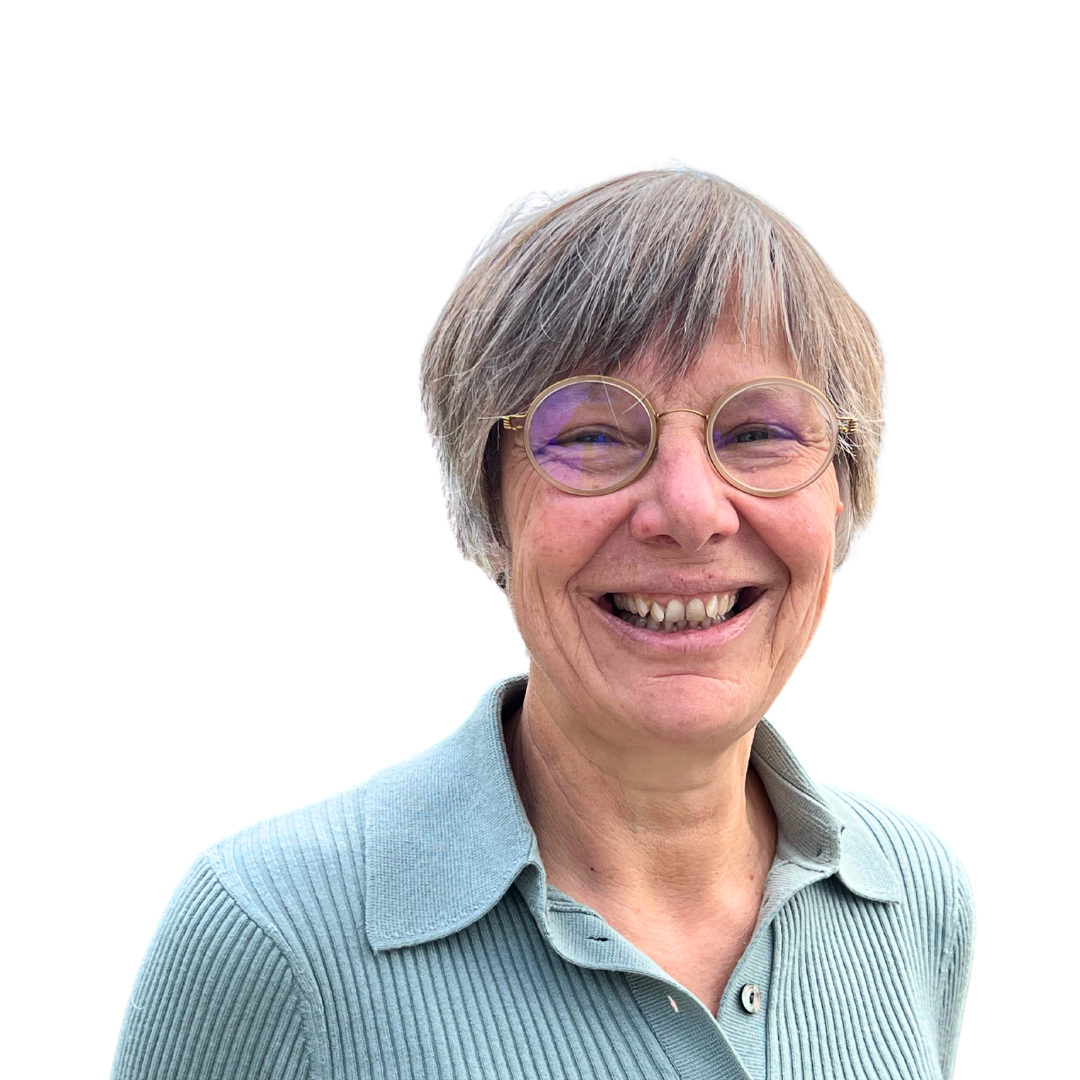
Yeah. My name is Suzanne and I live in Nelson, New Zealand.
[00:59]
And I've got a pretty full-on job.
[01:02]
I'm a general manager looking after a couple of pharmacies for a big corporate organization.
[01:09]
And so at some point in your life, you started to develop migraines.
[01:13]
Can you talk about the first few that you experienced, if you remember them?
[01:17]
I think I had headache or probably what was migraines the first time, maybe in my late 20s.
[01:24]
But, you know, very occasionally and I didn't know exactly what it was.
[01:30]
It was usually a really bad headache and I didn't really put too much attention into it because there was no regularity.
[01:38]
I didn't know what they were.
[01:40]
And I think I managed them just by ignoring them, I guess, for quite some time until they got more regular in my late 30s and going into my 40s.
[01:52]
And I think I became worried in my early 40s or with the start of perimenopause, maybe.
[02:00]
When I look back now, that's when they really ramped up and that's when I went to the doctor.
[02:06]
And I remember going to the doctor the first time and saying, I'm getting no headaches.
[02:11]
I thought it had something to do with my teeth.
[02:13]
And I went to the dentist and he gave me, you know, really strong painkillers.
[02:18]
And I thought something's wrong with my jaw.
[02:21]
And I got really worried.
[02:23]
And my doctor, she never mentioned the word migraine or, you know, headache, disease or anything.
[02:28]
I didn't feel like she was taking this very seriously.
[02:32]
So I kept going back and I felt like, is there something wrong with me?
[02:36]
Why can't somebody tell me what, you know, what this is?
[02:40]
And finally, you know, somebody called it what it actually is, migraines.
[02:45]
And I started to take really strong medication because over-the-counter stuff just didn't do it anymore.
[02:52]
Taking medication, getting better the next day and then having another big bad day the day after.
[02:58]
So it was always a three-day journey and then a few days break.
[03:02]
And then it kind of started again.
[03:04]
And so I went to a specialist then, to a neurologist, wanting to give me preventative medication.
[03:11]
And I just don't like taking medication because I know every time I take that strong migraine medication,
[03:18]
I feel like a zombie and my sleep is totally disturbed.
[03:23]
And I looked for other ways and I saw an osteopath and a lady that was specializing in physio for the neck and my GP on a regular basis.
[03:33]
And I remember sitting at my GP crying, saying, I can't manage this.
[03:39]
I can't be like this.
[03:41]
I can't imagine my life being like this.
[03:44]
And at the same time, I tried to work through it, you know, I tried to not bother anybody.
[03:51]
And I wouldn't talk about it at work only if it was really, really bad.
[03:55]
And then I would make it so that I just went home a little bit earlier because I have a bit of a headache.
[04:01]
I found it really hard to talk about it because you can't see it.
[04:05]
You can't, you know, there's nothing bleeding.
[04:08]
There's nothing broken.
[04:09]
There's nothing visible.
[04:10]
It's really hard for people to understand the pain.
[04:13]
It is also really hard for my husband to understand it.
[04:16]
And I can see him being quite scared of it.
[04:19]
And right now we're in this limbo, right, where I didn't have a headache for, I think, it's coming up four weeks.
[04:28]
Every morning he's going like, how's the heat?
[04:31]
And I can feel the worry in him and then the relief when I say I'm fine.
[04:37]
You know, the effect this has on relationship, on our relationship, not being able to, for me to say, yes, I can come with you somewhere next weekend because I don't know.
[04:50]
My pattern was a little bit like I would get through the week and then it would hit me on Friday, Saturday morning.
[04:57]
And before I found you, it was really bad.
[05:00]
There was no pattern to it anymore.
[05:05]
I was reading a lot about diet and tried to cut out carbs.
[05:10]
And I love my food.
[05:12]
When I'm having those really bad attacks, I get really hungry and I want to eat and I want to have carbs.
[05:19]
And I just couldn't go on those restrictions.
[05:22]
I wasn't strong enough to actually follow that through.
[05:26]
Physiologically, I have to say it would be really, really hard because women will have some excesses.
[05:32]
They will have some deficiencies.
[05:34]
And so the craving is also physiological.
[05:37]
It's not something that you decide in your head.
[05:39]
It's something that happens in your body.
[05:41]
I remember when I had headache three days, I was always scared that the next day I would get a really big migraine.
[05:49]
I found it hard to even enjoy those days where I was feeling really good because I kind of was anticipating that the next attack would come.
[05:57]
And it's still a little bit there, you know, that every day I wake up and I'm feeling good and I'm thinking, uh-oh.
[06:05]
But every time so far in the last two weeks, when I felt that a headache was coming on, I could manage it.
[06:12]
And I'm so bloody proud of that.
[06:17]
And how did you find me in the first place?
[06:19]
Like you were just browsing the web?
[06:21]
I've got a subscription with Audible.
[06:24]
You know, I always try to read and find out about migraine and how other people are dealing with it.
[06:30]
So often I just put it in as a search word.
[06:33]
And then the podcast came up.
[06:35]
I was actually driving to one of my pharmacies when I was starting listening to it.
[06:41]
And I got totally hooked.
[06:43]
I listened to most of them, I think.
[06:46]
And then that night I did the test.
[06:49]
And so they were the Migraine Heroes Podcast.
[06:52]
Do you remember some of your favorite stories to share with others?
[06:56]
And I really resonated with that because her pain sounded so terrible and she was so desperate.
[07:03]
And that resonated with me, that inspiration, you know, and that tried everything, taking all this medication, nothing helps.
[07:11]
So, you know, I was still on this journey of finding a solution.
[07:15]
But because I had so many negative experiences in the past, nothing really helped me that I tried.
[07:22]
And I thought, oh, you know, it always sounds a bit...
[07:29]
But then I thought, look, there's nothing to lose.
[07:31]
And I give it a go.
[07:32]
And you were so energetic and you kind of explained it so well to me that I thought, yeah, this all makes sense.
[07:39]
You know, the way you explained my pain to me and, you know, where you think it might could come from.
[07:46]
And, you know, I sound like you knew me.
[07:49]
And that really helped to ease my mind.
[07:52]
And I also love the idea of what you're doing with this app.
[07:55]
You know, I think this is amazing.
[07:57]
The simple fact that I track my COM every day is amazing.
[08:02]
You know, for starters, I tried it in the past to track my headache.
[08:06]
It kind of never worked out.
[08:08]
And now this is great.
[08:09]
And I can see, you know, myself, how I'm tracking and how many blue days, you know, when I'm sharp and free, I'm having, you know.
[08:19]
So I love the concept and how you do it.
[08:22]
And, you know, I open the app every day multiple times because I keep forgetting how much of what to put in what.
[08:29]
And, you know, the first few days I'm thinking, oh, yeah, you know, I get a few days without feeling too bad.
[08:37]
I think I have a few days in there where I probably put in that I had mild pain.
[08:41]
That already to me is a huge, was a huge success, you know, and still is.
[08:47]
When it is not getting to that point where it's absolutely terrible, when it's just kind of there.
[08:54]
But that's usually for me, that always used to be the start of something.
[08:58]
Sometimes it can be like that for a day and it doesn't develop into anything, you know.
[09:03]
How great is that?
[09:10]
And more often than not right now, I'm totally free.
[09:14]
And so I told you probably the beginning, but it's really hard to relate to.
[09:18]
So this is why this podcast is a bit different than others.
[09:20]
And we talk about this.
[09:21]
I always say the pain is going to decrease in intensity and in frequency until it disappears, which is a bit of a surreal sentence.
[09:30]
But it's exactly the definition of how you were feeling it, where initially you have a bad day, it's a terrible day.
[09:35]
It continues with a really high, like a really, really cloudy day.
[09:39]
Little by little this space out, which means that your brain gets a rest, which is massive.
[09:45]
As women listen to us, a lot of them will be in pain.
[09:48]
Hearing of someone not in pain anymore sometimes can make me think, oh, that's not going to be me.
[09:55]
And I'm going to be an exception.
[09:57]
When I heard people talking about how good they are now, I mean, it is a journey and I'm still on that journey.
[10:05]
And I just want to encourage people to give it a go.
[10:09]
And, you know, I'm feeling so much better right now.
[10:13]
It doesn't mean that I don't understand how horrible it was.
[10:16]
It's only a couple of weeks ago for me or maybe three weeks ago.
[10:21]
And so I have a very vivid memory of how horrible it can be.
[10:26]
And two things. One is I remember also when it started to get better.
[10:31]
And then one more thing I really want to say is also thanks to women like Suzanne
[10:35]
and thanks to all of the women who have preceded Suzanne, some of which were incredibly difficult cases
[10:42]
or really with weird situations, saying it doesn't matter how others do.
[10:47]
We want you to be out of migraines.
[10:50]
It allowed us to solve really complex situations involving child trauma and child abuse,
[10:57]
involving people having to take antibiotics each time they had sex.
[11:01]
Otherwise, they would have UTIs, so having recurring antibiotics because of other problems
[11:05]
and solving those problems so that there would be no more antibiotics.
[11:08]
Therefore, there would be no more funginess.
[11:10]
Like we've solved bloating, digestion issues, leaky gas, dysbiosis, endometriosis,
[11:16]
or at least reducing it to a very manageable level.
[11:19]
Very painful menstruation, clotting menstruation, baseball-sized clotting menstruation.
[11:24]
And it's all of these women that are not just coming in the podcast like Suzanne,
[11:29]
but that are coming with open hearts to explain their symptoms that allowed us to solve for them,
[11:35]
that allowed us to be better at solving it for extreme cases that say,
[11:40]
OK, then Suzanne, you know, then it looks more like a walk in the park.
[11:44]
Thanks to a number of these women that have been preceding us.
[11:48]
So I really want to encourage like don't feel isolated, don't feel unique.
[11:52]
Like we're really coming for you.
[11:54]
Exactly. Thank God you did.
[11:56]
You know, you're making a difference, certainly in my life, big time and in a lot of people's lives.
[12:03]
So, yeah, keep doing what you're doing. Thank you.
[12:07]
And look, a huge thank you, Suzanne, for coming and for just being you and being so authentic.
[12:12]
Thank you for all of these women that listen to you and feel they resonate with your story and your journey.
[12:20]
Before we go, I want to come back to something Suzanne said.
[12:24]
She found this podcast in her car driving to work.
[12:28]
And that same night, she decided to look at her own pattern.
[12:32]
So let me ask you a few of the questions her story made me think of.
[12:36]
Do your attacks come in waves, a bad day, a slightly better day than another bad one?
[12:44]
Did they change in your 40s or around your cycle?
[12:48]
When you're in pain, does your body crave certain foods?
[12:52]
And on your good days, are you already bracing for the next attack?
[12:56]
And however you answered, that's already a pattern.
[13:00]
And it isn't, Suzanne.
[13:02]
Everything we've learned from working with women like her is now built into the Margin Heroes app.
[13:08]
You can start by answering the kinds of questions I'd ask you and discovering your own starting pattern for free.
[13:15]
And if you want to go further, you can choose to continue with Margin Heroes as a paid service.
[13:20]
Behind it is a team, led by me, whose work it is to help you understand what may be driving your migraines
[13:28]
and make changes that can reduce their frequency and intensity over time.
[13:33]
If this episode left you wondering, what does this mean for my migraines?
[13:38]
The Margin Heroes app, the green one with the brain with a yellow love heart inside, is where to start.
[13:45]
Everything in the app grew out of years of working with women like Suzanne, one by one.
[13:51]
Every person taught us something that helps the next.
[13:55]
And that's what made it possible to turn that work into a method.
[13:59]
Anyone can start, from day one, wherever they are in the world.
[14:06]
That's all for today. I hope this episode added another piece to your migraine puzzle.
[14:11]
If you'd like to apply what we've discussed to your own life, you can find us by searching Migraine Heroes in the App Store or Google Play.
[14:19]
Look for the green icon with the love heart in the brain.
[14:22]
Migraine is complex, but it's not random. And every step forward brings us closer to lasting relief.
[14:29]
Your body has a story to tell. Let's keep listening. I will be back with you soon.