[00:00]
Welcome to the Migraine Heroes podcast, a podcast where we share real stories from real
[00:07]
people suffering and battling with migraine disease.
[00:12]
In this podcast, we seek to provide support, hope, holistic health, advocacy and inspiration
[00:19]
for those who suffer from migraine disease.
[00:23]
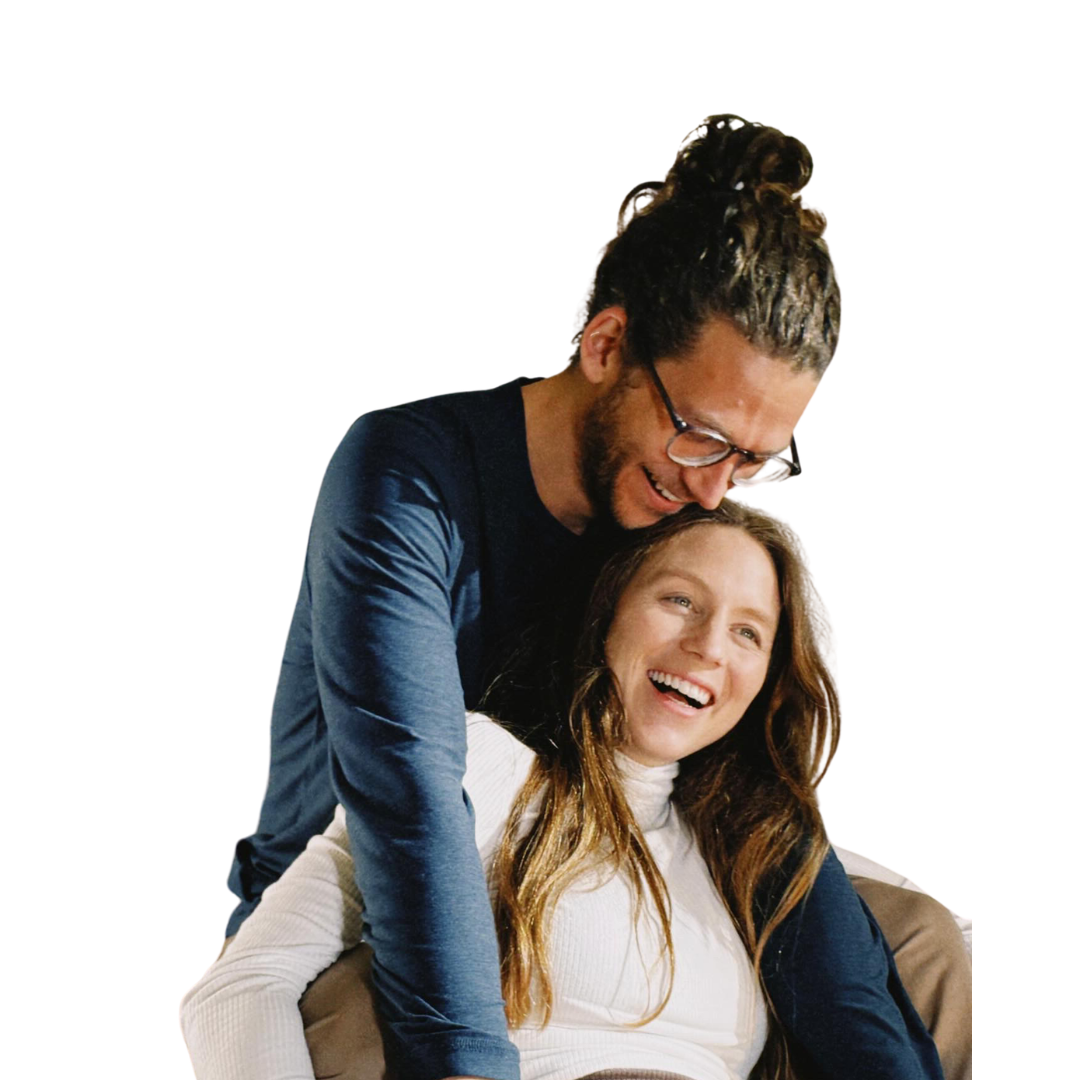
In this podcast, I exchange with Chris and Jessica.
[00:27]
I first met Chris as I was coding the app and starting to code the backend to figure
[00:32]
out which foods to allocate for whom.
[00:36]
And Chris was patiently listening to me and patiently problem-solving with me how to structure
[00:44]
As we were working together, Chris little by little puzzled that his wife, Jessica,
[00:50]
was not just having random headaches that were more and more intense, but that she was
[00:55]
most likely suffering from migraines.
[00:58]
And in this podcast, we discuss how Jessica goes from an ectopic pregnancy when I meet
[01:04]
with her to no more migraines and full fertility and is now 39 weeks pregnant as we discussed
[01:13]
And as they are living the life, surfing on the East Coast of New Zealand, being from
[01:19]
the U.S. and both having and embracing digital technologies and digital work, a warm welcome
[01:27]
to Chris and Jessica.
[01:32]
I am so, so happy to have you with me today.
[01:35]
It's good to be here.
[01:38]
Thanks for having us.
[01:40]
So this is really special because I know both Chris and Jessica in very different ways.
[01:46]
And so do you want to first share a bit with us who you are, where you live and where you're
[01:56]
So we live in Ngamonganui in New Zealand.
[01:59]
We're both American.
[02:00]
We're from North Carolina on the East Coast of the U.S. and we've been here for about
[02:06]
coming up on 10 years, actually.
[02:08]
So we've been here, we came here on a holiday, six month holiday, and we've just kept extending
[02:15]
I know it's been almost 10 years.
[02:18]
Yeah, there's just the two of us over here.
[02:20]
We've got most of our family back home, but we do actually have another member joining
[02:30]
Jessica is pregnant.
[02:31]
And so how many weeks are you, Jessica, now?
[02:34]
39 plus some number of days.
[02:39]
We massively thank Jessica for making it.
[02:43]
I'm so, so glad we're able to do this.
[02:46]
Thank you so much for taking the time.
[02:49]
And so we have to precise, for the ones who are not New Zealanders and who are listening
[02:54]
to us, you are living on the coast next to the ocean.
[02:57]
Yeah, that's right.
[02:58]
So we live in, I'll say it's sort of a smallish beach town slash city on the East Coast of
[03:07]
And Jess and I are both big surfers, which is actually what brought us to New Zealand
[03:10]
and why we always live by the coast.
[03:12]
So it's a nice little town that we live in.
[03:14]
You have quite the life.
[03:16]
It's a very modern life.
[03:17]
Can you comment on both of your activities?
[03:20]
I think people will have an even better picture.
[03:27]
So Chris, you code?
[03:31]
I've got a background in development, doing development, which is actually how we've met.
[03:36]
I'm not actually coding so much anymore.
[03:38]
I'm doing more design work and that sort of thing.
[03:42]
But yeah, that's kind of how I started my career, doing iPhone apps and kind of have
[03:47]
stuck doing that, just shifted, I guess, my focus and what sort of problems I work on
[03:55]
But yeah, it's always an exciting industry.
[03:57]
The tech industry has a lot of different things happening and it's always changing and lots
[04:03]
Completely, completely.
[04:06]
My background is actually as a photographer.
[04:08]
So I am a commercial photographer.
[04:10]
I also, since COVID, picked up another, some more work doing content marketing.
[04:16]
So I split my time between content marketing and doing some commercial photography work.
[04:20]
Quite the modern couple, I have to say.
[04:22]
I think I'm the coolest surfing in the beautiful part of the world and, you know, surfing the
[04:28]
digital wave at the same time to be able to live whatever suits.
[04:32]
So yeah, very modern life.
[04:34]
I think a lot of the listeners really, you know, it will resonate and will make a few
[04:40]
Chris, you and I met initially and we met, you know, in a development capacity.
[04:46]
Do you want to comment a little bit on how that happened?
[04:48]
I don't know if you remember roughly, you know, how we met and how we started to exchange.
[04:53]
Yeah, I can speak to that.
[04:55]
I do remember how we've met.
[04:57]
It was through a freelancer website that I think you posted some sort of job ad looking
[05:04]
I remember you said, I need a creative problem solver.
[05:07]
And I saw that and I go, oh, that's me.
[05:09]
I want to get in on that.
[05:10]
So I immediately jumped on the ad knowing that it was going to be fun and interesting
[05:16]
And yeah, I've kind of got a broad range of skills, which I enjoy employing in different
[05:23]
So yeah, that's how I remember it.
[05:25]
Is that how you remember it?
[05:27]
So it was a platform called the Unicorn Factory, which Conor Finlayson had started.
[05:33]
And it was in the early days of NoCode and he had set it up all in NoCode.
[05:37]
I found him by coincidence and I was really happy with his work and his platform.
[05:42]
And then indeed, I was trying to put a job title, but I didn't really know, okay, how
[05:48]
to formulate this because this is quite unusual, we're going to be coding for food and migraines
[05:55]
and I'm not quite sure how to position this.
[05:57]
So I'm going to need someone who's very creative, very open-minded, has a lot of empathy, a
[06:02]
lot of patience and a lot of kindness to hear all of the crazy stuff I have to say and the
[06:11]
crazier stuff I have to ask.
[06:15]
And so I remember that we hit it off pretty fast and then we worked together on multiple
[06:22]
occasions for probably, I mean, months, if not a few years, right?
[06:28]
It was probably a few years altogether, off and on for a few years.
[06:32]
Because we would start on a project and then I would use it for a while and then we would
[06:39]
make refinements and you would always have that incredible patience.
[06:43]
So do you want to comment, and these are my recollections, and we would meet, yeah, during
[06:49]
the day it was perfect because, you know, same time zone.
[06:51]
And yeah, we would meet and I would explain to you the crazy things I had in my mind and
[06:57]
you would help me structure them.
[07:02]
I like how you put that.
[07:03]
Because that is kind of what I enjoy doing is taking, trying to understand what people
[07:07]
are saying and basically translate that into some sort of end result, whether that's through
[07:13]
some like coding or no code or design work or something along those lines.
[07:18]
It's just, yeah, taking the ambiguous and understanding it and massaging it and trying
[07:23]
to make it a little bit more concrete.
[07:25]
And yeah, you definitely threw some interesting things at me and, but yeah, it was fun.
[07:30]
And very, it's really like tailor made because at that time I was given in certain systems
[07:36]
and you were embracing them and you were also helping me build tools that I could use and,
[07:41]
you know, press on certain buttons and trigger lists for women and observe them and also
[07:47]
find them where I was using them.
[07:51]
You know, you can do something that is, you can be asked something and just implement
[07:56]
it, but then it doesn't really work because at the time I was also not really understanding
[08:00]
So there was a lot of problem solving on, on you helping me clarify what was on my mind
[08:06]
and you helping to make a solution that would fit inside, you know, my backend and would
[08:14]
show up, you know, on, on the web app at the time later.
[08:19]
That was, you know, yeah.
[08:20]
And so I was extremely grateful because I really needed that patience, that handholding
[08:25]
and that problem solving and someone to listen, not necessarily interrupt, but also restructure
[08:32]
my thoughts, you know, with a lot of data in a very detailed way.
[08:37]
And I think you did that remarkably.
[08:40]
Oh, that's nice to hear.
[08:42]
Because I, to be honest for me, it's just, just maybe how I operate, but it's nice to
[08:46]
hear that it was what you needed at the time.
[08:50]
I mean, at the time, there's a whole, hold on, because you're probably not aware on the
[08:54]
latest development.
[08:55]
We have an app store, wait a minute, we have an app in the app store on Apple podcast and
[09:02]
on, um, on Google play and, uh, we have a whole system and what you've built is still
[09:10]
It's still is your code.
[09:12]
It's the last iterations that you've done.
[09:14]
We've done probably three or four iterations together and not because as I was going forward,
[09:19]
I was more understanding how to put those lists together.
[09:23]
So for the background, I, you know, put this together for women who suffer from migraines
[09:27]
and I was, uh, refining how to make them in the best way possible.
[09:32]
So that's the, it's really smooth for the woman and she can have less and less migraines.
[09:36]
And at the same time, it's hyper tailored to her.
[09:39]
So as I was understanding my intellectual process, you would translate that into, you
[09:44]
know, computer power, which I was really appreciative of.
[09:46]
So if we give you one example, one of the things Chris helped me do was, you know, when
[09:51]
I select foods, I need to filter out those foods that will counter medications, will
[09:56]
mess up with medications.
[09:57]
I need to respect the medication, leave it on the side.
[09:59]
Once the woman is a lot better, she can herself with her doctor review the need for medication.
[10:04]
My role is meanwhile to respect it and to function alongside by side peacefully.
[10:09]
And so your algorithms were making that.
[10:11]
And so, do you know, Chris, like to this day, it's still your algorithms inside still now.
[10:17]
And still I use them every single day.
[10:19]
If you remember that blue button I have, I click on that blue button every, you know,
[10:26]
every, every, every day, actually multiple times a day.
[10:34]
I'm sure we'll get into this, but I'm curious how that's been impacting the women that you
[10:39]
I mean, in ways that are extraordinary, because, you know, when we met, I was at the beginning
[10:47]
and I had success cases often, but not always.
[10:51]
And part of it is sometimes you lose someone because things are difficult.
[10:56]
And between WhatsApp and a web app, you know, things can be more clumsy.
[11:00]
But now we're really at scale where every single day we get in the community of the
[11:05]
app, in the chat of the app, like massive gratitude messages.
[11:09]
So we have something called hashtag team victory.
[11:11]
And so each time we have like a beautiful message inside the chat, we anonymize it and
[11:15]
we share it among the team members.
[11:17]
And that massively motivates everyone.
[11:19]
And so, and so, yes, we've made more discoveries, but the way you structure the algorithms have
[11:26]
allowed to welcome additional discoveries, so additional medications, additional conditions.
[11:32]
The database, when we started had 56 foods, if you remember, it now has 700.
[11:40]
And so we've been able to scale all of that with, you know, and it's really a moment of
[11:45]
actually massive gratitude for being on my way in those moments, for listening, for taking
[11:51]
me seriously, for when I was asking things that would not have made sense for most people,
[11:57]
for acknowledging, you know, my work and the way my brain was functioning or asking you
[12:02]
something and how you would translate it because it has by now had impact on, you know, probably
[12:09]
at this stage about, you know, probably we're maybe at more than a thousand people and really
[12:14]
profound way that changes their lives drastically.
[12:18]
And so, and so it's really, really, really special.
[12:21]
So from the bottom of my heart is also a moment of thank you and of gratitude because
[12:25]
it's, it's still there.
[12:27]
This is the core, you know, the rest, you know, yes, there's an app and yes, there's
[12:31]
a community and yes, there's chats and there's all of these other things that allow us to
[12:36]
Yes, the daily tracker is much, you know, with more data and more complete and we have
[12:41]
even a migraine now button now, but at the core of everything is that first set of algorithms
[12:47]
that we've written together and they still beat that drum while we expand foods, while
[12:53]
we expand conditions, while we expand the number of crazy things that we've seen.
[12:57]
And so, so it's a first, a huge shout out to say thank you and a shout out to your son.
[13:03]
If you listen to that, your dad is or has changed the life of a lot of people on this
[13:08]
planet and is about to do even more.
[13:11]
So this is the context of our relationship and so there's just a massive gratitude and
[13:16]
if you're listening to that, if you've benefited our services, some of you really owe it to,
[13:21]
I mean, all of you owe it to Chris because Chris has had that patient, those listening
[13:25]
skills that I would say most, certainly the vast majority of developers are not necessarily
[13:31]
equipped with or is not there for it.
[13:33]
Wow, that's really nice.
[13:35]
That's really nice to hear.
[13:36]
Yeah, I really mean it.
[13:38]
And so, so we worked together for quite a bit of time.
[13:42]
I don't know, like first set of a couple of weeks or months and then, then I said,
[13:46]
oh, Chris, I need to work with those algorithms and see, would I say the same as the computer
[13:51]
would say and help and support me and then we find them and then we would iterate.
[13:56]
Then after the second or third, maybe even fourth iterations, you started to talk about
[14:01]
your wife, like in the, maybe the second or third iteration, you started to talk about
[14:04]
Jessica and then one day you said, I think you should see my wife.
[14:09]
That went through your mind?
[14:13]
I mean, you speak to this a little bit more detail, but yeah, I mean, cause you were having
[14:18]
some headaches, right.
[14:20]
And they were, they were off and on and eventually it started becoming more and more common.
[14:26]
And I think that was what it was.
[14:27]
I actually can't remember exactly, but you know, from my understanding, I didn't really
[14:33]
know anything about migraines until working with you.
[14:36]
And the more that you were, you were teaching me about migraines, the more and more I was
[14:41]
just reflecting on that and kind of going, oh, I wonder if Jess actually is having migraines
[14:46]
and it's not just a headache that pops up every now and then, you know, became more
[14:52]
And eventually, I mean, I'll let you speak to this.
[14:54]
I think there was a, there was probably, I work with people that kind of just like denies
[14:59]
being like sick or like, I'm fine.
[15:01]
This is like, I'm fine.
[15:02]
It's not a big deal.
[15:04]
So I think there was a few things that was maybe going on and he probably was getting
[15:07]
really tired of hearing me complain about it.
[15:13]
But there was a, I think when you guys started talking.
[15:16]
No, I mean, honestly, if I got just a second, I will interrupt here.
[15:19]
No, you should never complain about it.
[15:27]
With migraine disease, we only have each other to make a difference.
[15:32]
If you know of someone suffering from migraine attacks, share this podcast with them.
[15:37]
Also, just like in your work, Chris, I think you took a lot of consideration on, let me
[15:41]
fully hear what she says.
[15:43]
Let's me iterate this.
[15:44]
Yes, it is what it says.
[15:46]
Like I think, you know, before drawing that conclusion, you waited to have enough data
[15:50]
points on, oh, I see all of the symptoms.
[15:53]
Yes, this is, this is very similar to what is the, so yeah.
[15:56]
So no, he was not bored and he was not, you know.
[16:01]
I mean, I was complaining and I think he was kind of picking up on that.
[16:05]
But I think, yeah, there was a couple of things going on and I think right around the time
[16:10]
that you both started working together, do you remember what year that was?
[16:15]
Yeah, it was around then.
[16:19]
I was kind of going, experiencing burnout from having tried to start a business and
[16:27]
then, you know, everything and like all of my energy burnt myself out to the ground.
[16:32]
And then the roll on effects of that started to catch up with me.
[16:36]
And so there was, I think there was when we, when we decided to stop operating that business,
[16:44]
I was having, every day I had to like lay on the floor from like starting at like 1
[16:49]
PM because my head hurts so bad, my head and neck hurts so bad.
[16:53]
I could not, yeah, I just couldn't function.
[16:56]
And so that's probably where it started from because I couldn't socialize, I couldn't do
[17:00]
anything that was really impacting me and I never had that before.
[17:06]
It was like, it was like what seemed like would be a headache.
[17:09]
And then eventually it became to a point where it was actually like affecting your day to
[17:16]
And it was like my, it was like my neck and my eyes and everything.
[17:19]
And I had started off going to a chiropractor and that, that took the edge off of it to
[17:27]
I think I'd been seeing the chiropractor for a year by the time I started to see you, Dan.
[17:30]
And so that helped start kind of kick things off.
[17:34]
And then when we saw, when I started seeing you, it was because I had just, we had an
[17:39]
ectopic pregnancy and I got put on antibiotics and I had some, my body just reacted not well
[17:52]
So it was, and I was still having headaches.
[17:53]
My headaches had been better.
[17:54]
I wasn't getting them every single day, but I'd probably get them at least three to four
[17:58]
times a week and varying, you know, degrees or severity.
[18:02]
So yeah, I, that was kind of the triggering part.
[18:07]
Like I had, I knew what you had, were doing, but I was having, I think that was a true,
[18:12]
the triggering point for me to kind of like, yeah, because it was causing a skin problems.
[18:19]
I still had my headaches and it was still affecting my day to day kind of.
[18:25]
I do remember from you, a lot of fatigue, skin, and then a lot of fogginess and a really
[18:35]
Remember you were very, very exhausted.
[18:37]
Very exhausted, very tired.
[18:39]
And I couldn't, I still couldn't really socialize.
[18:40]
Like I could socialize a little bit, but it just took so much out of me.
[18:46]
I remember, and this is a long time ago, so I still have you in my mind.
[18:49]
I remember for you, socializing was a huge trigger indeed.
[18:53]
And then flying was also a huge trigger.
[19:00]
Because I remember prepping you to go on a trip to visit your family in the US.
[19:04]
You were really doing that.
[19:05]
And I knew that we would get you quite ready, but you would also get a bit depleted from
[19:12]
those two triggers for a sustained amount of time.
[19:15]
So both the flying and the socializing.
[19:17]
But you ended up doing quite decent.
[19:22]
I think I did get a, I like, I had a little, I think I'd only been working with you for
[19:25]
about a month when we left to go to the States.
[19:28]
So I did get a headache, but it wasn't that bad.
[19:31]
And I had the Goji berries.
[19:34]
I brought Goji berries with me to have the Goji berry party and was able to kind of make
[19:41]
And then I remember when we came back, I didn't get a headache at all on the way back.
[19:48]
And I mean, I think like Chris says, I think, you know, initially when you started, you
[19:52]
were having headaches.
[19:53]
When we met you, it was pretty intense and it was very often.
[19:56]
I think women oftentimes really, really decrease their pain.
[20:02]
The one thing, you know, in the test, I asked how many migraine attacks do you suffer a
[20:06]
And he replied, I don't know, two or three.
[20:07]
Then you see like 20 different ones there.
[20:11]
He's, you know, a mild headache, if not above.
[20:15]
And so I've learned over the years to discard that stat, clearly that I'm paying it or not
[20:22]
self-aware because the pain is so present.
[20:25]
She's trying not to focus on it too much.
[20:31]
But I do remember that you were, you know, quite a lot of pain and that sort of fogginess
[20:37]
and tiredness and therefore the mood, you know, lower if you're really tired and you
[20:41]
can't socialize well, you know, it quite impacts you physically.
[20:47]
And Chris being so caring was quite, you know, sad about the situation because it's hard,
[20:54]
you know, if you can't help your spouse, you feel a bit nervous, but also a bit helpless
[21:00]
I would agree with that.
[21:02]
I mean, it's hard, right?
[21:04]
It's like you're frustrated and you can't help, so you have empathy, but it's, you don't
[21:11]
And so I remember when he connected the dots, I was like, oh yeah, that would, yes, that
[21:16]
would be what I do.
[21:19]
That's exactly right.
[21:20]
And what I loved in that moment is that you, I mean, it brought us even, I would say, further
[21:26]
together, Chris, because now you could really understand and follow the process and see
[21:31]
the result of your work directly on your wife, which, trust me, no one, we're the only
[21:38]
one in the world who has that.
[21:42]
That was really cool, actually being able to see the total other side of it because
[21:47]
you and I had always been working in, you know, the back end and what actually happens,
[21:52]
I'll say, under the hood a little bit.
[21:55]
And then I got to see, yeah, the complete other side of it day to day, you know, day
[22:00]
in, day out, what was happening, the foods that she was eating and how, yeah, using the
[22:09]
tracker, using the app on the phone, on your phone and just the progress that you were
[22:19]
It was really cool.
[22:20]
It was really, really cool.
[22:22]
It's quite special.
[22:23]
And so you're in a very unique position.
[22:24]
That's why when you texted me, I thought, oh, I'd love to have your voice because you've
[22:29]
been such a key component of everything.
[22:33]
And you know, and of all of that stars, and I tell you, it's still there, it still beats
[22:39]
the drum and it still, you know, changes a lot of lives like the one of Jess and a lot
[22:46]
of women are pregnant, unfortunately, with really good and really stable pregnancies,
[22:55]
very peaceful ones too.
[22:56]
And so, yeah, so that was really, really special.
[23:01]
And you went reasonably fast.
[23:03]
I can't remember exactly.
[23:04]
We had a bit of a longer tail end, but reasonably fast.
[23:09]
I think we worked together for like eight months because it was like, I think it was
[23:13]
maybe either August to May or something like that.
[23:17]
And look, you get a lot of results fast and then sometimes you search for a few last answers
[23:22]
and we've become really good at finding things very fast, but sometimes you're like, okay,
[23:26]
there's something missing.
[23:27]
There's still something that's making a bit of noise.
[23:29]
Oh, and I remember, I remember I got COVID during that time as well.
[23:34]
So I was navigating that after, and then that kind of set me back because that was like...
[23:42]
You remember back in the days in the app, there was the habits and the triggers.
[23:46]
And now we have added something called the regressors and COVID is a regressor and we're
[23:53]
telling women, look, if you catch COVID or a cold or a flu, or you have a toxic bust
[23:58]
or, you know, please let us know immediately as these things will slow you down.
[24:05]
And so we want to always go as fast as we can.
[24:07]
We always like, we try to be fast and faster and so try to intervene immediately.
[24:14]
And so now we're like, okay, if that happens to you, inform us immediately and we change
[24:17]
your lists to adapt to that, to hopefully, you know, like circumvent it and not get into
[24:29]
And I also remember the first food list that you put me on was like the blood list and
[24:32]
that I felt it was like an immediate, like energizer and I did it, I was after a week,
[24:38]
I was like, wow, I feel so good eating these foods.
[24:43]
Which is therefore, I don't know how you felt it, but therefore a lot harder if you catch
[24:48]
COVID later because you're like, oh my God, I felt so good and now I'm back to square
[24:55]
Yeah, that's right.
[24:57]
And it feels quite, that's also why we put the regressors.
[24:58]
We're like, well, you're going to feel like you're square one.
[25:00]
You're not technically because you'd bounce back a lot faster, but still we have to take
[25:04]
that seriously and help you through.
[25:06]
And if you hadn't done it, chances are you would have gone backwards by a lot.
[25:11]
And this is how people go from episodic to chronic for many.
[25:16]
And then you decided to start a family.
[25:19]
I'm going to jump forward, but this is where I'm like going in unknown territory.
[25:25]
We can edit if we need to.
[25:29]
But how did that come about?
[25:33]
Well, I think, okay, so obviously my health hadn't been that great before I started working
[25:40]
And I didn't really quite realize how bad it was until, until I started working with
[25:46]
And it kind of made me more aware of like, because when you do that tracker every day,
[25:50]
it really forces you to consider how you're feeling instead of just like glazing over
[25:54]
it just so you can get through the day.
[25:58]
And so it really forced me to take time to consider where I was at and to work on that.
[26:05]
And from that journey, I really did see an improvement in the way that I was feeling.
[26:11]
And I think it was just a matter of like, when do we finish?
[26:13]
We finished in 2023, April, May 2023 together, I think.
[26:17]
And then I went on a trip to Japan, which was a bucket list trip for myself that I wanted
[26:24]
And it kind of was like, like I got well enough to be able to do this trip.
[26:27]
And then like from there I was like, okay, I don't know how to describe it, but that
[26:32]
was sort of like the catalyst, I'd say.
[26:35]
And I think, I mean, we always had plans to do it one day.
[26:38]
It was always a one day sort of thing.
[26:40]
I'm like, oh, we'll do that.
[26:41]
You know, we'll do that one day.
[26:43]
And then you mentioned the ectopic.
[26:45]
I think that was the first time where, and that was totally unexpected because we weren't
[26:51]
And I don't know how personal you want to get here, but there was, you know, we were
[26:55]
on a proper IUD, so it was never meant to happen.
[27:00]
And it did happen.
[27:02]
And I think during that period, it kind of made us just reflect a bit like, you know,
[27:07]
are we sad that we didn't have a baby coming?
[27:11]
And then I think that's when it kind of, it opened the door a little bit for us.
[27:17]
And it was like, okay, let's do this Japan trip.
[27:20]
Let's, you're working on your health.
[27:23]
So kind of those things got ironed out.
[27:25]
And I think following Japan, it was like, all right, let's see what happens now.
[27:30]
And I love that you did that.
[27:31]
I think those things are so, so, so important.
[27:36]
And I think, you know, through the work that we do and thanks to you, Kristen, thanks to
[27:43]
you and Jessica, because by, you know, each time we were working with women, we were improving
[27:47]
the way you were working.
[27:49]
We got really good with fertility and I always encourage women, I'm like, hold off, hold
[27:54]
Just a little bit.
[27:56]
The moment I give you a green light, you're pregnant, just that it's a stable pregnancy.
[28:01]
No one needs, you know, like to go through difficult times.
[28:05]
And I love that you took that time for yourself to, you know, being a mom is a huge transition.
[28:12]
If you've had your mom back at least, and your mom immune, and you have your body by
[28:19]
your side, you know, everything's just so much smoother.
[28:23]
And I thought, I think just from seeing some friends go through pregnancy, I was aware
[28:27]
how much of a toll it takes on your body.
[28:30]
And so, yeah, I really wanted to make sure that I was as healthy as I could be.
[28:35]
Plus I'd had surgery for the ectopic, so just making sure I was like really recovered from
[28:43]
Yeah, completely, which we would have done because I always work on that, like always,
[28:47]
like the uterus needs to be a temple of love and blood and needs to always be cushy and
[28:52]
comfortable for the woman to have a beautiful face, age really beautifully, you know, have
[28:58]
a place of vulnerability for us.
[29:00]
So like, you know, keeping things in order for, you know, whenever we decided to be parents
[29:06]
or just for ourselves that, you know, we carry health for really long.
[29:12]
And so how was your pregnancy so far?
[29:13]
Yeah, it's been, I feel, I honestly feel so grateful and lucky because I have had a really
[29:22]
It's been, you know, I had a little bit of morning sickness at the start, minor, I actually
[29:27]
ended up getting COVID again at the start of my pregnancy.
[29:30]
And the only time I was like throwing up was, was when I had COVID, so, but once I caught
[29:36]
up through that, I have, it's been smooth sailing.
[29:40]
So yeah, I've been feeling pretty good in my body.
[29:44]
You know, a little bit of aches and pains, but I worked with my same chiropractor and
[29:47]
she just, she's got like spidey senses and she just looks at you and she's like, we need
[29:53]
I can see what we need to do.
[29:54]
And just like, just a little tweak here and a little tweak there.
[29:56]
You know what we do for our listeners, for the ones who are in your region, we add her
[30:02]
contact details in case someone's in your region.
[30:06]
Natural Chiropractic is her.
[30:08]
As a thank you for all of the beautiful work.
[30:13]
And I think, you know, I think having some sort of like body worker in that way, because
[30:18]
your body is changing so much and just like to make sure that it's like your body's in
[30:22]
alignment and that's facilitating you to have like the best transition.
[30:27]
Your skull is changing.
[30:29]
Everything's changing.
[30:31]
So yeah, that is really, that's, that's probably my number one thing that's helped me so much.
[30:34]
And otherwise I just, I don't know, it's just been like, yeah, pretty smooth I'd say.
[30:40]
So pretty and so beautiful.
[30:42]
You know, like if for the listeners who can't see Jess, like she has a glow, she's gorgeous
[30:49]
Your hair is gorgeous.
[30:50]
If you hadn't told me you're not pregnant at 39 weeks, you could still see it.
[30:54]
And I just, I would have no idea.
[30:59]
Oh, that's beautiful.
[31:01]
That's really, really beautiful.
[31:06]
So what are, well, I mean, the plans, I guess, are quite, you know, settled a bit for the
[31:11]
time being and becoming a family.
[31:14]
We don't have any major plans at this point.
[31:16]
We do have some family coming, coming over to visit, which will be nice.
[31:21]
And I'm sure we'll appreciate the support as well.
[31:24]
And yeah, we're just going to be trying to make the most of the transition that we're
[31:28]
about to go through.
[31:30]
Oh, that's so sweet.
[31:31]
Doing the most of maternity leave.
[31:33]
But as early as well I can.
[31:37]
Well, look, I want to say just a huge thank you from the bottom of my heart for you two,
[31:42]
for you three, just being who you are and being such great listeners, you know, listeners
[31:48]
of each other and of your buddies, of your own selves.
[31:51]
And then for accepting the challenge, Chris, a couple of years ago to work together and
[31:56]
to beat that drum.
[31:57]
It was quite special from this end.
[31:59]
So it's a huge thank you.
[32:04]
I mean, we've enjoyed it as well.
[32:05]
I know we said this already at the start, but it was fun being part of that journey.
[32:09]
And it was also great to see the other side of it.
[32:12]
And thank you for what you've done for us and for Jess and getting things back on track
[32:19]
No more headaches.
[32:21]
It is better without.
[32:24]
But meanwhile, it's useful.
[32:27]
Meanwhile, I find it really, really useful.
[32:29]
It's a tool for longevity.
[32:31]
And I have recently found a great article from a professor at Harvard called Elizabeth
[32:36]
And she talks about how it's a gene that is part of evolution for a reason.
[32:40]
And she poses a couple of hypotheses on how protective that gene is for population.
[32:45]
And that's why so many people who carry that gene survived for millions of years is because
[32:51]
And so I think in your case, your buddy was saying, hey, enough with the fatigue, enough
[32:54]
with the fogginess, enough with the lack of socializing, like just, you know, please take
[33:00]
And one of my friends, she said, your children are your best teachers.
[33:03]
And I think before they come to the world, they try to teach us all the lesson is like,
[33:07]
hey, if you're going to take care of me, can you please make sure you take care of yourself?
[33:14]
It's like those airplane commercials or, you know, where they're like, put your, you got
[33:17]
to put your own air mask on first in order to help other people.
[33:21]
And that's so true.
[33:24]
This is really the first step, you know, in we're becoming moms before we even are pregnant.
[33:28]
It's like just preparing the whole, everything so that things can be smooth and nice and
[33:33]
happy just the way you have a glow and are ready to welcome, you know, a new life in
[33:40]
Well, a huge thank you to you three.
[33:43]
And we look forward to, I look forward to the picture and the reveal of it.
[33:47]
We look forward to sharing it, so we'll keep you posted.
[33:54]
Thanks a lot, Diane.
[33:58]
The content in this podcast should not be considered a substitute for medical professional
[34:03]
advice, diagnosis or treatment.
[34:07]
Always consult with your health care provider for any health related concerns.
[34:11]
And remember, everyone and every situation is unique.
[34:17]
Remember sharing is caring.
[34:20]
Share your story with me.
[34:22]
Take my free test and let's connect to help you gain a deeper understanding of your migraine
[34:29]
Learn about the underlying imbalances that could be contributing to your genetic predisposition
[34:35]
Join our community of Migraine Heroes.
[34:37]
All the links in the description below.
[34:41]
If you're looking for a community, we'd love to have you join us in our Facebook groups.
[34:47]
Migraine Heroes is a community all about creative expression and open conversations around migraine.
[34:54]
We have a second group called Migraine and Comorbidities, where we support each other
[34:59]
through the unique challenges of living with migraine alongside things like IBS, ADHD and
[35:08]
Just check the links in this description.
[35:10]
We'd be very happy to welcome you there.